The Priceless Value of Live Music Performances
by Richa Rai, 2025-2026 Student Committee Treasurer
November 7th, 2025

In an era where individuals can simply tap to find music, live performances have transformed into an overlooked experience. With the quick access to social media and various streaming platforms, it’s easy for people to forget their emotions when watching an in-person performance. While listening to a song through headphones is convenient and simple, it will never reach the emotional energy of hearing the same song performed in real time. Live performances hold a special value – a value that connects people, commends artists, and reminds us of how music brings joy and light to the world.
We live in a world dominated by instant access via streaming sites, making music more available than it ever was before. Spotify, Apple Music, and YouTube allow individuals to play music within seconds. But, this convenience comes with negative consequences; we lose the warmth that live music creates. According to a report from Statista, approximately 70 percent of adults in the United States claim to feel more emotionally connected to artists when attending live concerts compared to listening to their recordings. An emotional connection makes a powerful impact because every performance is unique. No one can tell how the crowd will react during a live performance, and the blemishes that may occur. Recorded music may be ‘perfect,’ but this isn’t what makes the music alive.

Source: ABC Classic, Study reveals how classical music concerts synchronises audiences' hearts
To add on, science backs up this emotional difference. In a study from the University of London, researchers found that people attending live concerts experience roughly a 27 percent boost in endorphin levels, and their heart rates sync to the people around them. Your body makes a physical reaction to the performance. This connection is something that cannot be recreated with earbuds or even an accurate recording.
The feeling of an emotional connection is one of many goals that artists have during their performances. In a 2024 interview, Grammy-winning artist Brandi Carlile spoke about her experiences at shows, saying that there was “no substitute for singing to real people–you feed off their energy, their faces, their voices. That’s what makes it human.” She emphasizes what performers always feel, the live energy toward the audience. Their cheers, shouts, and sing-alongs are what make the show its own story, with ups and downs along the way.
Recently, I attended the Mementos Music “A Night in Madrid” concert. The physical setting, like the candlelights on stage and the dimmed lights, helped set the mood of this performance. I felt as if I was in the streets of Madrid in the moment, hearing the footsteps in their performance of Boccherini’s Music of the Streets of Madrid. All of the musicians at the concert played with a range of emotions, as the audience could see the shifts in the moods of the pieces in their eyes and body language. The concert helped me realize that this energy is what makes live music special.
In addition to an emotional impact, live music has important consequences on culture and the economy. Over 145 million fans went to concerts and live events in 2023, generating billions of dollars for local city revenue. Not only do concerts boost local economies by supporting small businesses, but they also create numerous job openings for the concert itself. By taking the time to purchase a ticket for a live concert, you’re not only supporting the artist but also helping other people around you.
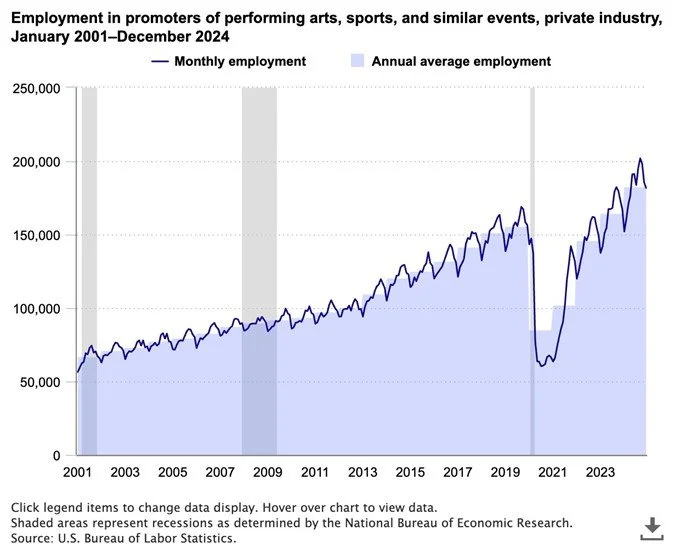
An increase in job opportunities in the performing arts sector is shown by the graph above.
In a personal sense, live performances create priceless memories that a recording can never replace. You cannot ever recreate a crowd singing the chorus of a song, or an artist making an improvisation on their instrument. Only at that moment does the audience experience this memory that will stay with them for years. A fan study from Spotify’s research team backs up this claim, proving that people who attend live concerts have a 25 percent higher level of happiness in the week following the performance. This mood change is caused by the interactions in the audience and the emotions of being around an audience that enjoys the same type of music as you.
Some may argue that there are many advantages to recordings of music. Technology allows artists to mix tracks, layer, and fix imperfections in their sound. It also has a significant benefit: accessibility. You can search up any type of music, anywhere, and find a recording almost instantly. However, these advantages don’t erase the important values of live performances. Live music is about the experience, and not repeatability. The flaws in live music remind us that music isn’t about making ‘perfect sounds’–it’s about making the audience feel something inside of them.
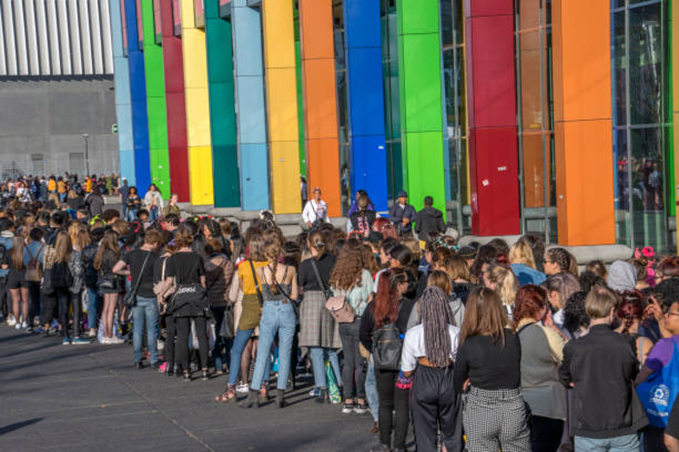
“Waiting In Line For The BTS Concert At The Ziggo Dome Amsterdam, The Netherlands”
While AI music and auto-tune exist, there are still lines out the door for a Taylor Swift concert or watching a classical music performance. Why, you might ask? Because live music brings the connection of people from different backgrounds, beliefs, and experiences. It unifies all of their history into an unforgettable event.
To conclude, the next time that you’re debating between Spotify playlists and a live show, remember that music isn’t magical with perfect sound–it’s the true moments that define it. Streaming music may be convenient, but the authenticity of a live performance and its human connection are irreplaceable.
Works Cited
ABC Classic. “How Classical Music Concerts Synchronise Audiences’ Hearts.” ABC News (Australia), 23 Oct. 2023, https://www.abc.net.au/listen/classic/read-and-watch/news/how-classical-music-concerts-synchronise-audiences-hearts/102969210.
Brandi Carlile, quoted in Rolling Stone Magazine, April 2024.
Goldsmiths University of London. “Endorphin and Heart Rate Synchronization in Live Music Audiences.” 2022.
Live Nation. 2023 Global Impact Report. Live Nation Entertainment, 2023.
Spotify Fan Study. “Live Music and Happiness Correlation.” Spotify Research Team, 2022.
Statista. “Share of Adults Who Feel Emotionally Connected to Artists at Live Concerts in the U.S. (2023).” Statista, 2023.
U.S. Bureau of Labor Statistics. “Employment up 174 Percent since 2001 for Promoters of Performing Arts, Sports, and Similar Events.” The Economics Daily, 17 Jan. 2025, https://www.bls.gov/opub/ted/2025/event-promoters-employment-up-174-percent-since-2001.htm.
“Waiting in Line for the BTS Concert at the Ziggo Dome, Amsterdam, the Netherlands.” iStock, photo by DutchScenery, Getty Images, 2021, https://www.istockphoto.com/photo/waiting-in-line-for-the-bts-concert-at-the-ziggo-dome-amsterdam-the-netherlands-gm1339484234-419817158.