Beyond the Podium: Exploring the Importance of Conductors
by Ashvita Rajesh, Student Committee Marketing Manager
November 7th, 2025

Imagine sitting in a grand concert hall, filled with the subtle whispers of anticipating audience members. On stage are the members of the orchestra, dressed in concert black, tuning their instruments. Then, the hall quiets down to silence moments before the conductor proudly walks on stage. On the podium, on which the conductor stands, they raise the baton. Suspense floods the room. As the conductor begins waving around the baton, signaling the start of the music, the orchestra fills the room with a sense of liveliness and emotion that was not present before. As the music unfolds, the conductor's graceful, swift motions guide the orchestra through each measure. As an audience member, nothing can compare to the feeling of harmony that overwhelms you. Often misunderstood, the role of conductors is not simply to serve as a metronome for the orchestra but instead to provide a harmonious balance and convey the emotion of the piece to the audience.
Starting in the 17th century, musicians, with famous examples including Bach and Handel, typically played in small ensembles without a leader. Instead, they regularly looked to more experienced or senior players to lead the ensemble, such as the “first violinist (concertmaster) or the keyboard player” (Music Science Life). By providing hand gestures to maintain the tempo and to convey dynamics, these leaders provided coordination without an official conductor. This informal leadership was not only suitable for the orchestras of the time but also for the nature of Baroque music, which was prominent during this era.
In the 18th and 19th centuries, however, the role of conductors started evolving more. Prominent composers like Haydn, Mozart, and Beethoven wrote music that required precise coordination among musicians that had not been there before. This increase in the size and intricacy of the orchestras rendered it far more difficult for one player within the orchestra to lead while also playing an instrument. Therefore, there was a rise in the role of conductors to guide the orchestra through movements.
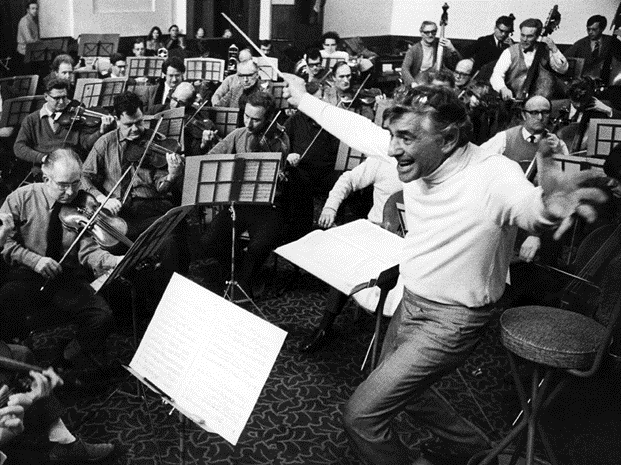
Moreover, in the 20th century, there were renowned conductors like Leonard Bernstein and Arturo Toscanini who introduced new methods and depth to conducting. Bernstein had emphasized that the conductor should inspire the orchestra, instead of just keeping time, with many noting that he extracted "every drop of expressiveness from the music" (Learning from Bernstein the Conductor). In addition, Toscanini, who was famous for precision and fidelity to the score, set standards for intensity and discipline. For example, Toscanini saw music “as [if it were] religion”, showing “unbearably intense” concentration during performances and even rehearsals (Classical Notes). Furthermore, he had a “savage temper” and would be easily angered over the smallest, slightest mistakes (Classical Notes). The introduction of radios and television made conductors influential figures who were very much admired. It is here that conducting developed from simply leading to artistic interpretation for the sake of conveying emotion.
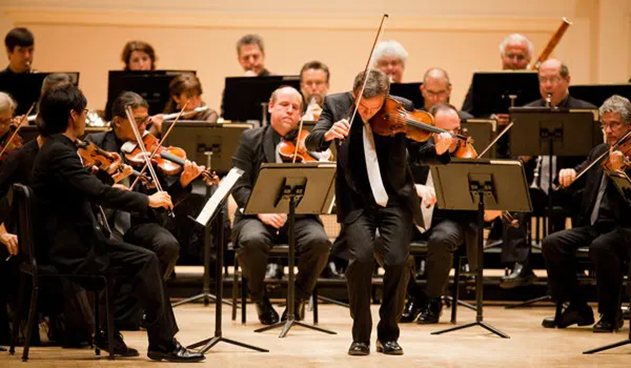
While conductors have become a symbol of high regard in the orchestra, there are exceptions in the form of conductorless orchestras. Examples like the Orpheus Chamber Orchestra rely on the coordination and collaboration of musicians rather than on a conductor. In the words of the orchestra's former concertmaster, Arnold Steinhardt, "There is a constant dialogue among the musicians, with leadership shifting seamlessly depending on the piece and moment" (Indivisible by Four). Within conductorless orchestras, the direction is not given to a fixed person, but it is rotated, with players directing parts alternately, with the concertmaster providing cues to be harmonious. In addition, orchestras of this type specialize in pieces of Baroque and early Classical repertoire, which are less intricate and more predictable. However, of course, without a conductor, these ensembles do have difficulties in putting together the bigger or more complicated works, especially pieces of the Romantic period. Moreover, without a conductor, the orchestra may lose the unity of dynamic control and tempo that an experienced conductor can provide. For example, Mahler’s Symphonies which are known for their intricate tempo changes and structure and contrast in dynamics and mood, would not be possible without the presence of a conductor to maintain transitions and pacing to unify the ensemble.
In conclusion, the role of conductors has seen a dramatic evolution, from informal leadership over small ensembles to the visionary presence on podiums today. As ensembles grew and pieces became more complex, conductors came to be needed not just to maintain the beat but to shape the music. But conductorless groups like the Orpheus Chamber Orchestra always remind us that teamwork and shared direction can also produce wonderful music, especially in specific repertoire types. However, the challenges these orchestras face with larger works showcase the value a skilled conductor brings toward orchestral unity and expression. Ultimately, regardless of a conductor's guide or collective musicianship, the essence of orchestral concerts is that which is established between artists and audience members in a shared experience of music.
Orpheus Chamber Orchestra at Carnegie Hall
Source: The New York Times, http://nytimes.com/2011/10/17/arts/music/orpheus-chamber-orchestra-at-carnegie-hall-review.html
Works Cited
Are, Who. “12 Composers Who Are Also Conductors.” Composerism.org, 2025, www.composerism.org/articles/12-composers-who-are-also-conductors. Accessed 2 Nov. 2025.
Gutmann, Peter. “Toscanini, the Recorded Legend, Classical Notes, Peter Gutmann.” Classicalnotes.net, 2025, www.classicalnotes.net/features/toscaweb.html. Accessed 2 Nov. 2025.
“Learning from Bernstein the Conductor.” Www.brandeis.edu, www.brandeis.edu/arts/festival/history/bernstein-brandeis/remembering/learning-from-the-conductor.html.
“Leonard Bernstein’s “Rite of Spring” Thrill Ride.” NPR, 25 May 2013, www.npr.org/sections/deceptivecadence/2013/05/25/186489566/leonard-bernsteins-rite-of-spring-thrill-ride?jwsource=cl. Accessed 20 Oct. 2025.
Steinhardt, Arnold . “Indivisible by Four.” Nytimes.com, 2018, archive.nytimes.com/www.nytimes.com/books/first/s/steinhardt-four.html. Accessed 20 Oct. 2025.
the, Tracing. “Tracing the Historical Evolution of the Role of a Conductor: Techniques and Technology Transformations for Aspiring Musicians.” Musicsciencelife.com, 12 Feb. 2025, www.musicsciencelife.com/articles/tracing-historical-evolution-conductor-techniques-technology/.
Nyt.com, 2025, static01.nyt.com/images/2011/10/17/arts/orpheus/orpheus-jumbo.jpg?quality=75&auto=webp. Accessed 20 Oct. 2025.